A Musical Trip to Thailand
Introduction
When deciding what kind of music to discuss, Thai music caught
my eye because I realized I had never heard it before and had no idea what it
was like. I have heard a lot of different traditional cultural music, so
getting the opportunity to learn and write about something new excited me and
made it an easy decision to decide what to write about. Piphat ensembles and their
variants are the most common kind of traditional Thai music, so I chose to go
with it to try and get the best look at the core of Thailand’s classical music.
Elements of the Music
The core of Piphat music is always an ensemble involving both
wind and percussion instruments, with a minimum of six instruments, but the number
of instruments can be higher depending on the variant. Piphats usually have a very
high pitch, primarily provided by fast Xylophones dominating the song. There
are barrel drums in the background of Piphats that have a somewhat lower pitch,
but they are overtaken by the Thai xylophones known as Ranat Thum. The
timbre of the music is very unique to the Thai culture, with how it combines xylophones,
drums, oboe, small symbols, and a gong circle. A standard Piphat ensemble has loud
dynamics that normally peak in the middle of the song.
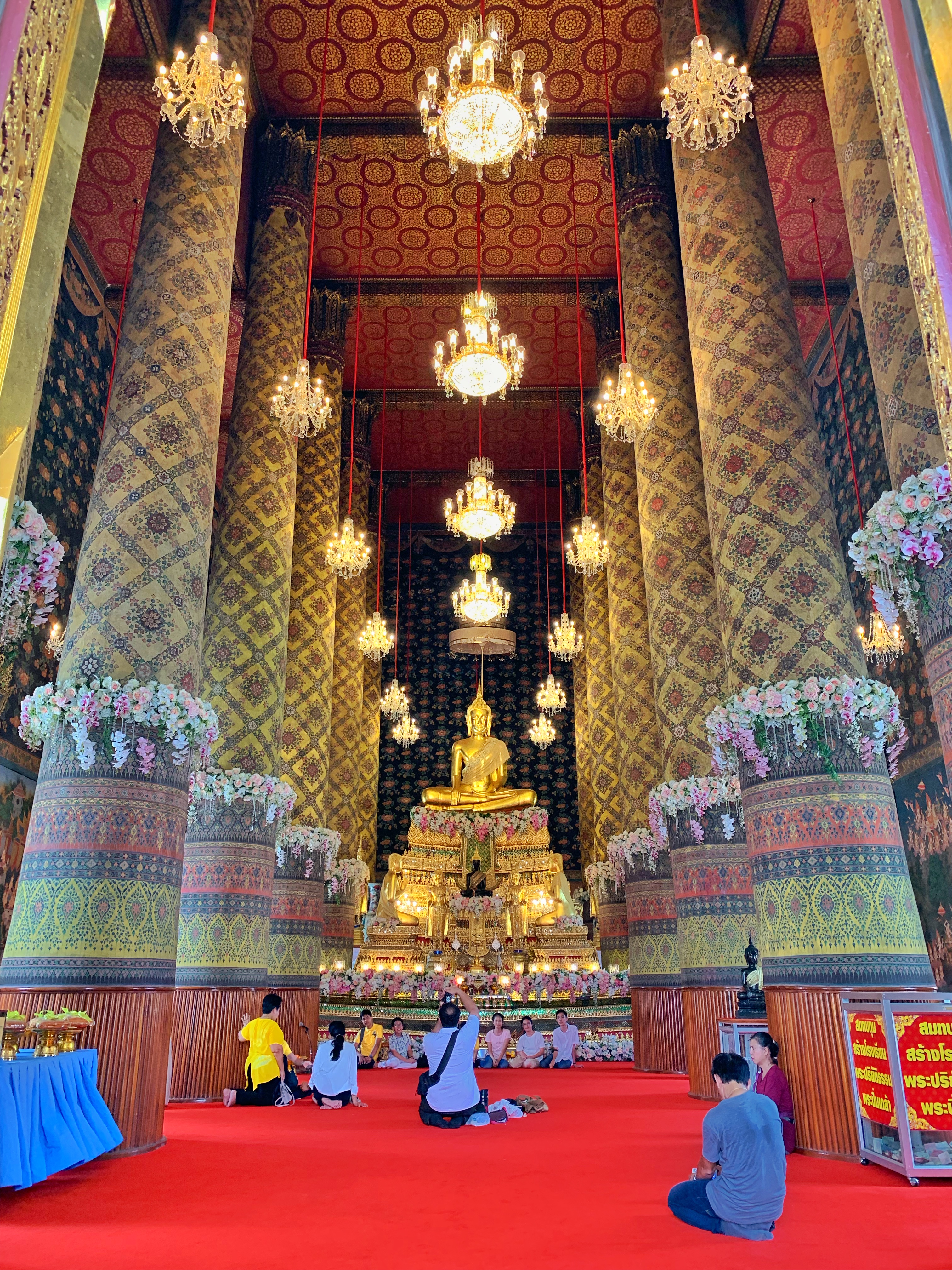
Cultural Component
Within Thai culture, for hundreds of years, Piphat ensembles
have been used for a large variety of ceremonies and continue to be used for
them today. One type called Piphat Nang Hong is used at funerals. There
are also different variants used for royal funerals that were halted for a long
time but recently resumed, starting in 1995. Another common use of Piphats is
for different kinds of dramas and theater performances. In Thailand, almost
every musician at least one time goes through a Wai Khru Piphat ceremony
to honor their teachers as well as their traditional gods of music through a Piphat
Ensemble. Overall, Piphat has been a core part of Thai culture and has been linked
to many things in Thailand for a long time, and continues to be even now.
Personal Reaction
When I listened to the music, it felt distinctly different
than what I was used to with Western music, but that is what makes it so interesting
to me, even without being a part of the culture it is rooted in. I really enjoyed
the unique combinations of instruments that I hadn’t heard in music before. Even
if it isn’t what I’ll listen to on the regular in the future, I’m thankful I listened
to it and expanded my view of music from it. All in all, I really enjoyed listening
to traditional Piphat.
Citations
administrator. “Music for the Soul: Wong Piphat, the Thai
Classical Orchestra - Thailand Foundation.” Thailand Foundation, 2 July
2021, thailandfoundation.or.th/thai-classical-orchestra/.
Miller, Terry E., and Jarernchai Chonpairot. “A HISTORY OF
SIAMESE MUSIC RECONSTRUCTED FROM WESTERN DOCUMENTS, 1505-1932.” Crossroads:
An Interdisciplinary Journal of Southeast Asian Studies, vol. 8, no. 2,
1994, pp. 1–192. JSTOR, http://www.jstor.org/stable/40862685. Accessed 3
Mar. 2026.
Wikipedia Contributors. “Music of Thailand.” Wikipedia,
Wikimedia Foundation, 14 Jan. 2020, en.wikipedia.org/wiki/Music_of_Thailand.
Wikipedia Contributors.
“Piphat.” Wikipedia, 5 Sept. 2021, en.wikipedia.org/wiki/Piphat.
.jfif)

I enjoyed this there is a lot of information to read. Keep up the good work.
ReplyDeleteHi Drake! I thought it was really interesting how you picked something you’ve never heard before and actually took the time to understand it. The way you described the instruments for example the xylophones and drums made it easier to picture what the music sounds like. It helped me how you explained the cultural side too like how it’s used in ceremonies because that made it feel more meaningful than just the sound itself. It was cool seeing a different type of music that most people don’t usually talk about.
ReplyDeleteI enjoyed reading your post and listening to the songs you included in it.
ReplyDeleteI found it fascinating and intriguing in the first song how much dissonance is used in the dynamics. When the xylophone player hits multiple notes at once, sometimes it seems like a traditional chord from western music; sometimes, though, the notes clash and have a very different effect. I find the wind instruments, too, to be much different in timbre than most wind ensembles in western music. The notes feel a lot less steady, as if the performer were more interested in conveying a mood than blowing a clear, even note. I appreciate how the performers take a moment to acknowledge their heritage before playing. It seems like an appropriate way to show respect for one's teachers.
-Ethan Bowser
Such an interesting pick! The first piphat ensemble you linked has a captivating echo/hollowness to it, while still having a fun light jumpy sound, unlike any instrument i've heard before! The music is structured very differently, to be sure. I guess, I too, have never actually heard Thai music before today. It truly is so unique and distinct. Great post.
ReplyDeleteVery cool topic I enjoyed reading your analysis. The songs have a good complexity and the way the instruments work together is very intriguing. It's cool to learn about the history of the Piphat ensembles and their cultural significance. Overall very interesting!
ReplyDelete